How Professionals Can Leverage Agentic AI to Build Smarter and Scalable Business Solutions
Written by Matthew Hale
- How Agentic AI Is Revolutionizing Business Operations
- Agentic AI and Its Impact on Business Operations
- The Strategic Role of Agentic AI Frameworks in Modern Business
- Understanding Agentic AI Frameworks and Tools
- Components of an Agentic AI Framework
- Popular Agentic AI Tools
- Interoperability in Enterprise Ecosystems
- Practical Agentic AI Business Applications
- Transforming Industries Through Autonomous Intelligence
- The Business Transformation Power of Agentic AI
- Conclusion
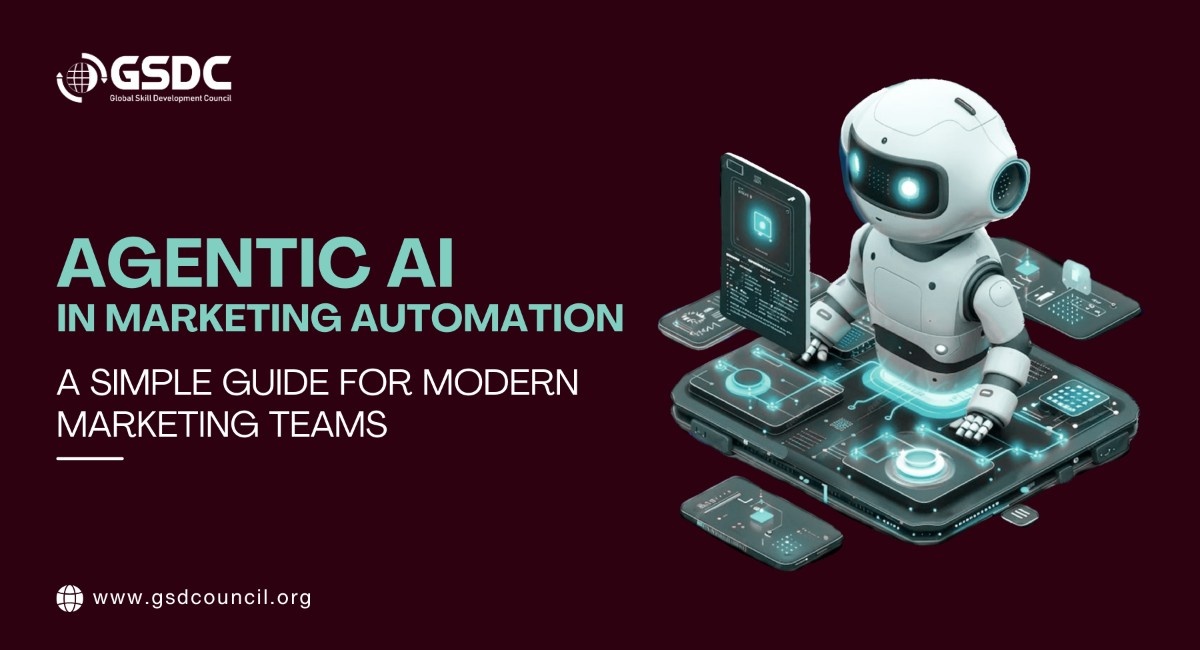
Agentic AI marks a new era of intelligent systems that act autonomously-planning, deciding, and adapting with minimal human input. Unlike traditional AI that simply follows commands, Agentic AI independently executes multi-step tasks to achieve business goals.
For example, beyond drafting emails, it can schedule meetings, follow up, analyze outcomes, and refine strategies on its own. This makes it a game-changer for businesses seeking scalability and operational efficiency.
This blog explores how Agentic AI is transforming modern business-enhancing operations, driving automation, and creating new opportunities for professionals and entrepreneurs in the AI-driven economy.
How Agentic AI Is Revolutionizing Business Operations
The adoption of Agentic AI is accelerating as enterprises realize its measurable business impact. Studies show that 66% of organizations using AI agents report increased productivity, while 57% experience notable cost savings.
It’s estimated that by 2030, Agentic AI could add between USD 2.6 trillion and USD 4.4 trillion to the global economy.
Three main factors fuel this growth:
- Advanced large language models (LLMs) and orchestration tools enabling autonomous operations.
- Cross-functional integration that reduces human dependency while improving precision.
- The growing need for real-time data intelligence in competitive markets.
Agentic AI and Its Impact on Business Operations
Agentic AI differs from traditional automation by setting its own objectives, sequencing subtasks, and adapting strategies based on outcomes.
Agentic AI differs from traditional automation by setting its own objectives, sequencing subtasks, and adapting strategies based on outcomes. Early adopters report up to 40% IT productivity gains and 35% workflow efficiency improvements. The GSDC continues to play a key role in promoting global standards and practical learning in this evolving AI landscape.
Its business impact extends beyond automation - it enhances reasoning, coordination, and creativity. With Agentic AI, professionals move from manual execution to strategic orchestration, positioning AI as a cognitive collaborator in business growth.
The Strategic Role of Agentic AI Frameworks in Modern Business
To fully unlock the power of agentic AI, organizations must adopt robust agentic AI frameworks. These frameworks provide the structural foundation for how autonomous agents interact, learn, and execute within business systems.
Such frameworks enable:
- Task coordination between multiple AI agents.
- Integration with enterprise data systems and workflows.
- Human-AI collaboration to ensure accountability and oversight.
- Governance mechanisms to manage risk and ethical considerations.
🚀 Ready to Transform Your Business with Agentic AI?
Understanding Agentic AI Frameworks and Tools
What Are AI Agents?
AI agents are autonomous systems capable of observing, planning, and acting based on goals. Unlike static AI models, they maintain context, memory, and learning ability.
Example: A global consumer goods firm cut a week-long marketing analytics process to one hour by using an AI agent that gathered data, analyzed performance, and implemented updates autonomously.
This follows the Observe-Plan-Act cycle:
- Observe: Collects contextual data from systems or interactions.
- Plan: Uses models to define goals and prioritize actions.
Components of an Agentic AI Framework
While implementations may differ, most agentic AI frameworks share these five foundational components:
- Agent Interface: Connects users, databases, and enterprise systems through APIs or protocols, enabling the agent to observe and interact with its environment.
- Memory Module: Maintains both short-term and long-term memory, allowing the agent to remember context, factual knowledge, and previous actions.
- Profile Module: Defines the agent’s role, behavioral patterns, and objectives within a business process.
Planning Module: Uses AI models to evaluate goals and generate task sequences aligned with the organization’s strategy. - Action Module: Executes defined actions through system integrations and monitors outcomes to refine future decisions.
Together, these components create an adaptable framework capable of continuous learning, real-time optimization, and scalable automation.
Popular Agentic AI Tools
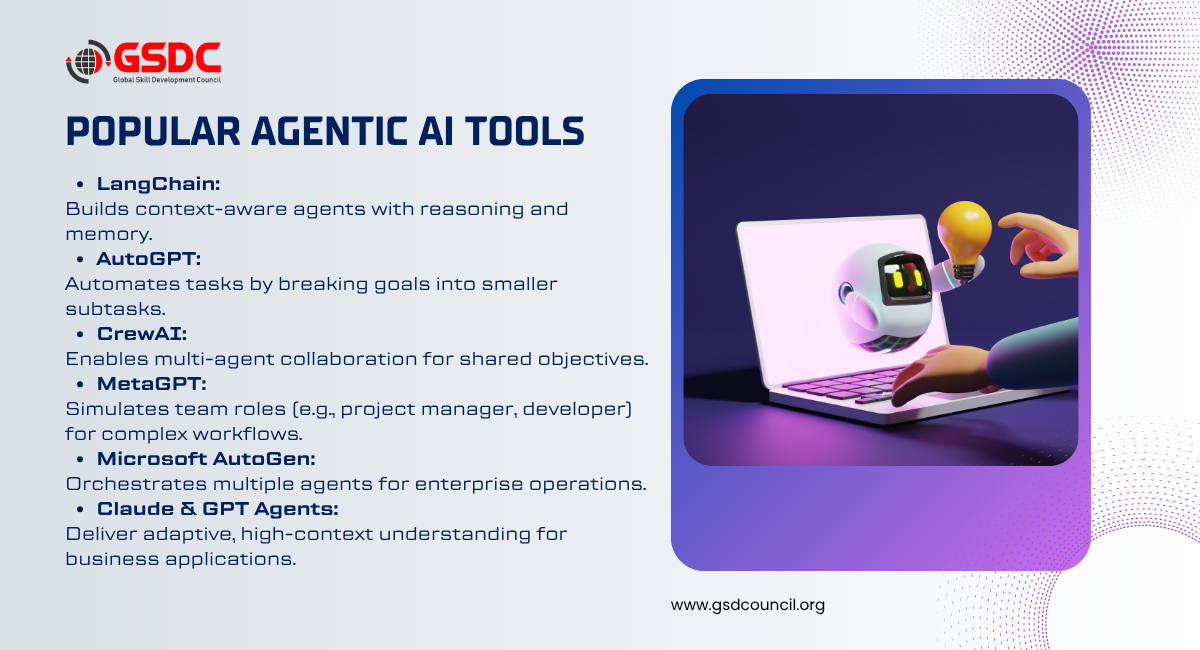
A growing number of agentic AI tools empower organizations to design, deploy, and manage autonomous systems efficiently. Some of the most recognized include:
- LangChain: A framework for building context-aware agents capable of reasoning, memory, and multi-step task execution.
- AutoGPT: A widely used open-source platform that enables autonomous task completion by breaking down goals into manageable subtasks.
- CrewAI: Designed for multi-agent collaboration, allowing agents to work together to achieve shared objectives.
- MetaGPT: Focuses on team-based agentic operations - simulating roles such as project managers or developers to complete complex workflows.
- Microsoft AutoGen: A tool for orchestrating multiple AI agents to perform end-to-end business operations while integrating with existing enterprise applications.
- Anthropic’s Claude and OpenAI GPT-based agents: Provide adaptable, high-context understanding that powers advanced agentic AI business applications across industries.
Interoperability in Enterprise Ecosystems
Agentic AI thrives on interoperability, integrating with CRMs like Salesforce, ERPs like SAP, and cloud platforms.
Examples:
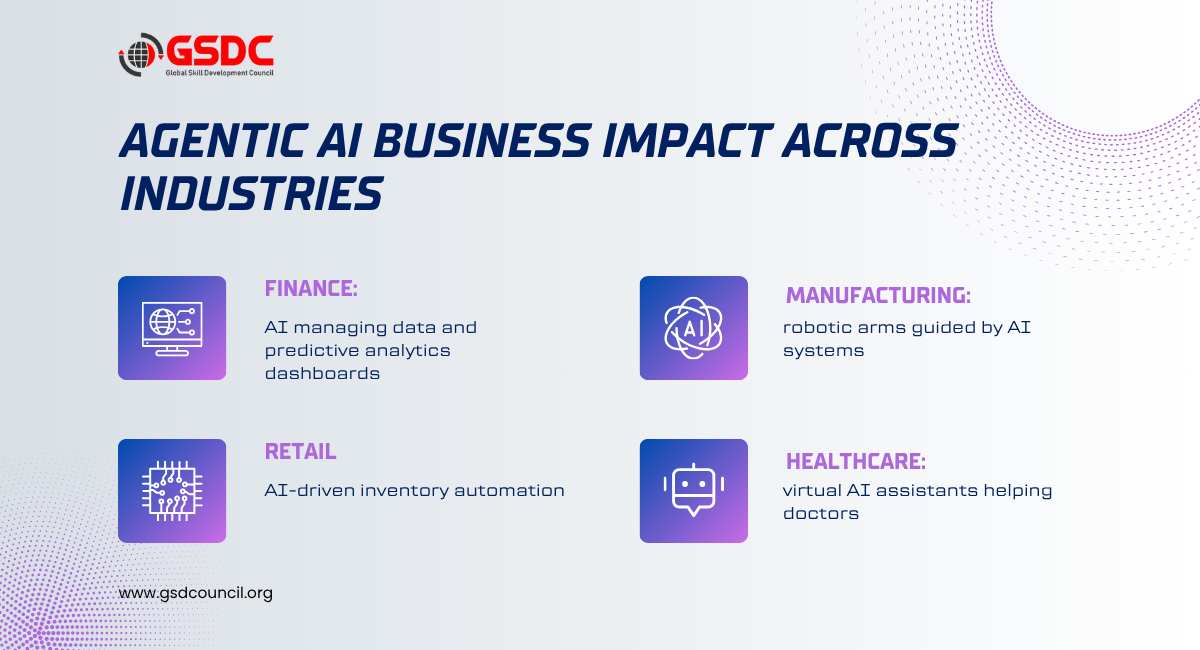
- Finance: Executes trades and monitors compliance autonomously.
- Retail: Manages inventory and logistics.
- Manufacturing: Interacts with IoT systems for predictive maintenance.
- Healthcare: Coordinates diagnostic and scheduling systems.
This connectivity builds intelligent ecosystems where decisions, data, and tools work in harmony.
Practical Agentic AI Business Applications
The real power of agentic AI business applications lies in their ability to act autonomously - managing end-to-end workflows, learning from outcomes, and making strategic decisions. These systems combine automation with adaptive intelligence, redefining efficiency and performance across industries.
-
Customer Experience: Personalized Interactions and Intelligent Support
Agentic AI delivers hyper-personalized engagement, anticipating customer needs and providing 24/7 intelligent assistance. Unlike traditional chatbots, these agents continuously learn, enhancing accuracy and satisfaction.
- Impact: 54% of organizations report major CX improvements and a 66% boost in employee productivity.
- Example: Amazon and Sephora use AI agents to analyze behavior and recommend products, increasing conversions by over 30%.
Outcome: Greater satisfaction, 40% faster responses, and stronger customer loyalty.
-
Operations: Workflow Automation and Optimization
Agentic AI automates and optimizes processes across logistics, manufacturing, and IT-predicting issues, coordinating tasks, and improving efficiency.
- Example: BMW uses AI agents for predictive maintenance, reducing downtime by 40% and improving throughput.
- Outcome: 30% higher efficiency, 25% cost reduction, and smoother operations.
-
Decision-Making: Predictive Insights and Adaptive Strategies
Agentic AI autonomously analyzes data, identifies patterns, and adjusts strategies in real time.
- Example: JPMorgan Chase employs AI agents for fraud detection and compliance monitoring, cutting manual workloads and improving detection accuracy by 20%.
Transforming Industries Through Autonomous Intelligence
From customer service to manufacturing and finance, agentic AI business applications deliver tangible impact. Organizations integrating this technology report:
- 20-40% improvements in efficiency
- Up to 25% cost savings
- Significant gains in decision speed and accuracy
By embedding agentic AI into daily workflows, businesses unlock smarter operations, adaptive intelligence, and lasting competitive advantage in today’s fast-evolving digital economy.
Opportunities for Consultants and Entrepreneurs
Emerging Services
- AI Strategy Consulting: Identify automation opportunities and develop AI adoption roadmaps.
- Custom Agent Development: Build domain-specific agents for compliance, analytics, or operations.
- Integration Services: Combine agentic AI with existing digital tools for scalable automation.
- Managed AI Services: Offer monitoring and optimization for accuracy and compliance.
- Training & Enablement: Develop certification programs to help teams scale AI effectively.
Scalable Offerings
- AI Workflow Automation Packages for repetitive processes.
- AI-as-a-Service (AIaaS) subscriptions for departmental automation.
- Custom Model Development for specialized analytics or decision support.
- White-Label AI Systems for agencies to rebrand and resell.
Monetization Models
- Project-Based Fees: One-time solution deployment.
- Retainer Models: Recurring monthly maintenance.
- Performance-Based Pricing: Revenue linked to efficiency outcomes.
The Business Transformation Power of Agentic AI
The agentic AI business impact lies in transforming how companies operate - enabling autonomous systems to handle multi-step processes, make contextual decisions, and collaborate with human teams. This reduces labor costs, increases accuracy, and enhances scalability.
For consultants and entrepreneurs, success will depend on creating value-driven solutions that align technology with client objectives. Agencies that specialize, demonstrate measurable ROI, and maintain ongoing client relationships will lead the next generation of AI service providers.
The Growing Demand for Agentic AI Certification
As intelligent automation expands, professionals with Agentic AI certification gain a clear advantage. Certifications validate expertise in multi-agent design, automation frameworks, and ethical AI practices.
Benefits
- High Market Value: In-demand for leadership roles in AI strategy.
- Skill Validation: Demonstrates practical and theoretical mastery.
- Consulting Edge: Builds trust in responsible AI integration.
- Career Differentiation: Distinguishes professionals in a fast-evolving field.
Available Agentic AI Certification Courses
Structured certification programs now train professionals in agentic systems, autonomous agent design, and AI business integration.
The Global Skill Development Council (GSDC) offers a professional-level Agentic AI Expert Certification focused on real-world application-covering multi-agent system design, ethical deployment, and business automation strategies.
Conclusion
Smarter and More Strategic Outcomes
Agentic AI moves beyond automation to enable systems that can reason, plan, and act independently, driving faster decisions and operational agility.
Adopting the Right Frameworks
Structured frameworks ensure ethical, scalable, and transparent AI deployment, unlocking sustainable business growth.
Empowering Professionals
Professionals who adopt Agentic AI early will lead this transformation-leveraging intelligent systems to drive innovation, strategy, and measurable impact across industries.

Related Certifications
Stay up-to-date with the latest news, trends, and resources in GSDC
If you like this read then make sure to check out our previous blogs: Cracking Onboarding Challenges: Fresher Success Unveiled
Not sure which certification to pursue? Our advisors will help you decide!