Transformational Leadership: Inspire, Motivate & Engage Employees

Written by Treasure Kalu
- Understanding Transformational Leadership
- Leadership vs. Management: Understanding the Difference
- Moving Employees from Compliance to Commitment
- The Four Pillars of Transformational Leadership
- Creating a Culture of Ownership
- How Leaders Inspire Teams Every Day?
- The Role of Continuous Learning in Leadership
- Why Transformational Leadership Matters More Than Ever
- Advance Your Leadership Career with GSDC's Certified Leadership Development Professional (CLDP)
- Conclusion
Organizations today operate in an environment defined by constant change, evolving employee expectations, and increasing pressure to innovate. In such conditions, technical expertise and operational efficiency alone are no longer enough to drive long-term success. What often separates thriving organizations from struggling ones is the quality of their leadership skills and commitment to leadership development.
Employees are more likely to perform at their best when they feel connected to a meaningful purpose, valued for their contributions, and inspired by those leading them. Strong employee engagement, employee motivation, and workforce engagement not only improve productivity but also support effective employee retention strategies. While effective management ensures that tasks are completed and goals are achieved, exceptional leadership creates engagement, builds trust, and motivates people to go beyond minimum expectations.
This is where transformational leadership stands out. Rather than simply directing employees, transformational leaders inspire them to embrace a shared vision, take ownership of their work, and continuously grow both personally and professionally. By fostering motivation, innovation, and commitment, the transformational leadership style helps organizations build high-performing teams, drive employee performance improvement, and create lasting impact.
Understanding Transformational Leadership
What is transformational leadership? Transformational leadership is a leadership approach that focuses on inspiring and empowering people to achieve extraordinary results. The transformational leadership model relies on vision, trust, emotional intelligence in leadership, and personal example rather than authority, policies, or performance metrics.
While managers typically focus on processes, deadlines, and operational efficiency, transformational leaders focus on people, growth, and long-term impact. Understanding transformational leadership vs transactional leadership highlights the difference between managing tasks and inspiring people. Both roles are important, but leadership plays a critical role in shaping organizational culture and employee commitment.
A transformational leader helps individuals see possibilities beyond their current capabilities. Instead of asking employees to simply complete assigned tasks, they encourage them to contribute ideas, take ownership, and become active participants in the organization's success. These transformational leadership characteristics are among the key benefits of transformational leadership, enabling organizations to build engaged, innovative, and resilient teams.
Leadership vs. Management: Understanding the Difference
Leadership and management are often used interchangeably, but they serve different purposes within an organization. While both are essential for success, they focus on different aspects of performance and growth.
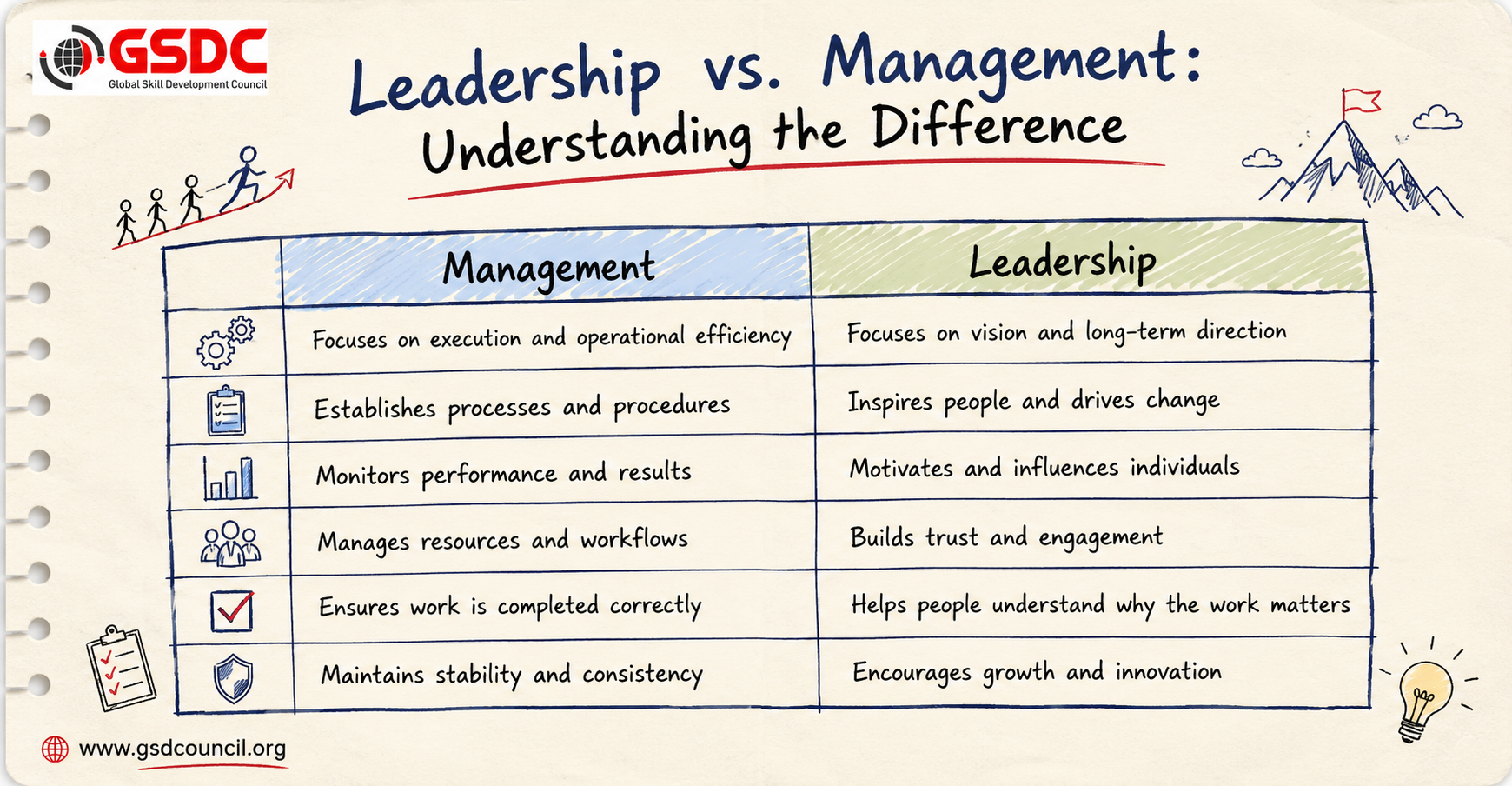
Managers ensure that organizational goals are achieved efficiently through planning, coordination, and control. Leaders, on the other hand, inspire people to move toward a shared vision and contribute beyond their immediate responsibilities.
The most successful organizations recognize the importance of both. However, when organizations have strong management but weak leadership, employees may complete tasks effectively without feeling connected to the broader mission. Transformational leadership bridges this gap by turning routine work into meaningful contribution and encouraging employees to become active participants in organizational success.
Moving Employees from Compliance to Commitment
Many organizations succeed in creating compliance. Employees understand policies, follow procedures, and complete assigned responsibilities.
However, compliance alone rarely creates exceptional employee performance improvement.
Commitment occurs when employees genuinely believe in the organization's mission and feel personally invested in its success. Committed employees often demonstrate higher employee engagement, stronger employee motivation, greater initiative, and are more likely to stay with the organization, supporting effective employee retention strategies.
Transformational leadership recognizes that people are more motivated by purpose than by rules alone. The transformational leadership style creates environments where employees feel connected to organizational goals, strengthening workforce engagement and helping them understand the value of their contributions.
When people move from compliance to commitment, organizations experience one of the key benefits of transformational leadership increased engagement, stronger collaboration, and sustained employee performance improvement.
The Four Pillars of Transformational Leadership
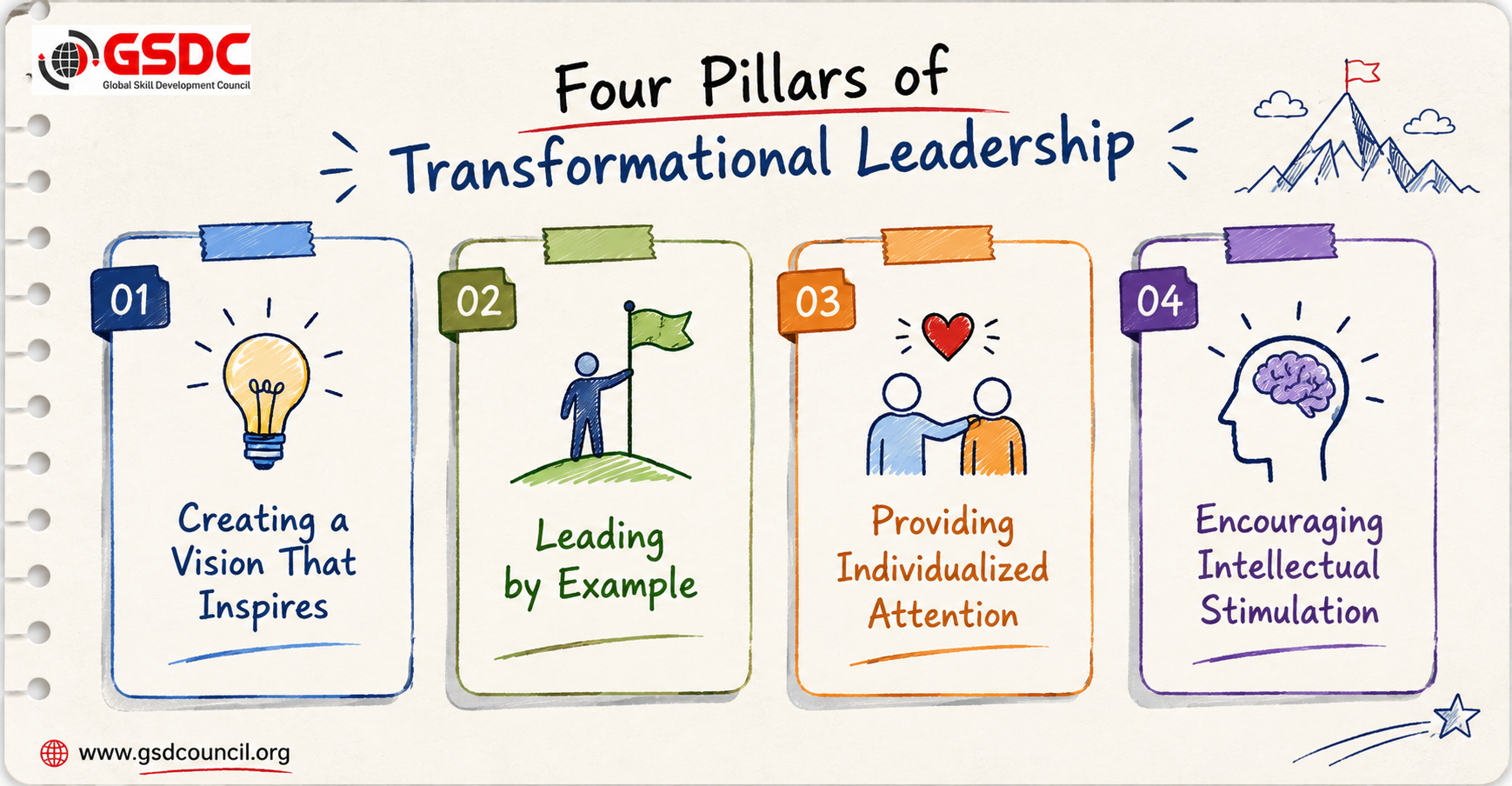
Transformational leadership is built on four foundational principles that help leaders inspire and develop high-performing teams.
1. Creating a Vision That Inspires
Every successful transformation begins with a compelling vision.
Employees are not motivated solely by salaries, incentives, or performance metrics. While compensation remains important, people are often inspired by the opportunity to contribute to something meaningful.
A strong vision helps employees understand:
- Why the organization exists
- Who it serves
- How its work creates value
- What success looks like
Organizations that communicate a clear purpose often build stronger engagement because employees can connect their daily responsibilities to larger outcomes.
Rather than focusing exclusively on revenue targets, transformational leaders emphasize impact. They help employees see how their work improves customers' lives, solves important problems, or contributes to broader organizational goals.
When employees understand the purpose behind their work, motivation becomes more sustainable and meaningful.
2. Leading by Example
Leadership credibility is built through actions, not titles.
Employees pay close attention to how leaders behave. They observe how leaders handle challenges, communicate with others, and respond to accountability. If leaders expect excellence, discipline, and professionalism, they must demonstrate those qualities consistently themselves.
Transformational leaders understand that culture is not created through policy documents alone. Culture is shaped by repeated leadership behaviors that employees observe every day.
This means leaders must model:
- Accountability
- Integrity
- Professionalism
- Consistency
- Respect for others
When leaders embody the values they promote, employees are far more likely to adopt those behaviors themselves.
3. Providing Individualized Attention
Every employee is different.
Some individuals are motivated by career growth opportunities. Others value recognition, flexibility, learning opportunities, or increased responsibility. Effective leaders recognize these differences and adapt their approach accordingly.
Transformational leaders take time to understand their team members as individuals. They actively seek to understand:
- Career aspirations
- Strengths and weaknesses
- Development needs
- Personal motivators
Rather than applying a one-size-fits-all leadership style, they tailor their support to individual needs. They ask meaningful questions such as:
- What are your career goals?
- Which skills would you like to develop?
- How can the organization support your growth?
Employees who feel seen, heard, and valued are generally more engaged and committed to organizational success.
4. Encouraging Intellectual Stimulation
Innovation thrives when people are encouraged to think.
Transformational leaders create environments where employees are challenged to solve problems, share ideas, and contribute to decision-making processes. Instead of providing all the answers, they ask questions that encourage critical thinking.
This approach offers several benefits:
- Greater innovation
- Stronger problem-solving capabilities
- Increased employee confidence
- Better decision-making
- Enhanced ownership
Organizations that encourage intellectual stimulation often discover valuable ideas from unexpected sources. Employees at every level possess unique insights that can contribute to organizational improvement when allowed to participate.
Transformational leaders understand that their role is not to be the smartest person in the room. Their role is to bring together talented people and create an environment where great ideas can emerge.
Creating a Culture of Ownership
One of the most powerful outcomes of transformational leadership is ownership.
Traditional management approaches sometimes create employees who simply complete assigned tasks. Transformational leadership encourages employees to think and act like stakeholders.
When employees develop a sense of ownership:
- They take greater responsibility for outcomes.
- They contribute ideas proactively.
- They solve problems without waiting for instructions.
- They remain committed during difficult periods.
- They focus on organizational success rather than individual tasks alone.
Organizations that cultivate ownership often experience stronger performance because employees become personally invested in achieving shared goals.
How Leaders Inspire Teams Every Day?
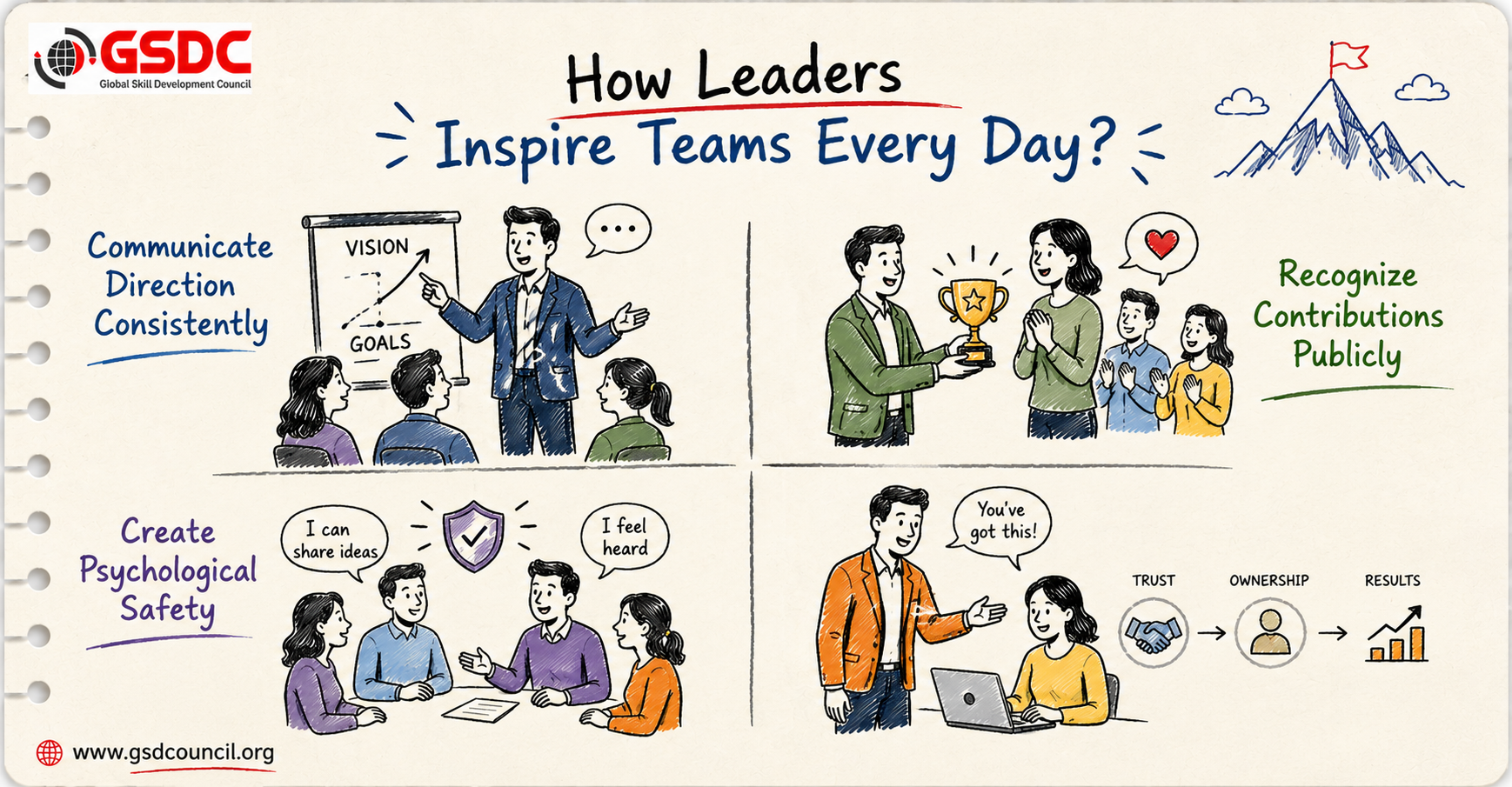
Transformational leadership is not a one-time event. It requires consistent effort and daily reinforcement.
Several practices can help leaders maintain employee motivation and engagement.
Communicate Direction Consistently
Employees should never be uncertain about where the organization is heading.
Leaders must continuously communicate organizational goals, priorities, and expectations. Repetition is important because consistent communication reinforces purpose and alignment.
Recognize Contributions Publicly
Recognition is a powerful motivator.
When employees receive acknowledgment for their efforts, they feel valued and appreciated. Public recognition not only rewards high performance but also encourages positive behaviors across the entire organization.
Create Psychological Safety
Employees should feel comfortable sharing ideas, concerns, and feedback.
Psychological safety allows individuals to contribute openly without fear of criticism or rejection. Teams that operate in psychologically safe environments tend to be more innovative, collaborative, and resilient.
Empower Rather Than Control
Instead of focusing exclusively on instructions and supervision, leaders should empower employees to make decisions and contribute solutions.
Empowerment builds confidence, encourages accountability, and strengthens engagement.
The Role of Continuous Learning in Leadership
The modern workplace continues to evolve rapidly. New technologies, changing customer expectations, and shifting business models require organizations to adapt constantly.
Transformational leaders understand that continuous learning is essential for both leaders and employees. Learning helps organizations remain competitive while preparing teams for future challenges.
A strong learning culture encourages employees to:
- Develop new skills
- Stay current with industry trends
- Improve problem-solving abilities
- Adapt to changing environments
- Pursue personal and professional growth
Organizations that invest in continuous learning are often better positioned to navigate uncertainty and capitalize on new opportunities.
Why Transformational Leadership Matters More Than Ever
- Employees today value purpose, career growth, meaningful work, and supportive leadership beyond salary and job security.
- Strong employee engagement, employee motivation, and workforce engagement are essential for attracting and retaining top talent.
- Organizations that neglect these areas often experience lower productivity, disengagement, and retention challenges.
- Transformational leadership empowers employees by making them feel connected, valued, and motivated.
- This leadership style drives employee performance improvement while fostering a culture of innovation and collaboration.
- Leaders with strong leadership skills, emotional intelligence, and a commitment to leadership development are key to achieving long-term organizational success.
Advance Your Leadership Career with GSDC's Certified Leadership Development Professional (CLDP)
GSDC's Certified Leadership Development Professional equips professionals with practical leadership skills to drive transformational leadership, improve employee engagement, boost employee motivation, and support employee retention strategies. It prepares managers, HR, and L&D professionals to lead high-performing teams and succeed in the future of work.

Aligned with modern leadership practices, the Certified Leadership Development Professional certification helps professionals develop the leadership skills needed to improve employee motivation, support employee retention strategies, and lead workforce transformation with confidence. Whether you are a manager, HR professional, L&D specialist, or emerging leader, the GSDC CLDP certification prepares you to lead effectively in today's evolving workplace while enhancing your long-term career prospects.
Conclusion
Transformational leadership goes beyond managing tasks and meeting deadlines. This transformational leadership style focuses on inspiring people, creating a shared vision, and helping employees realize their full potential through stronger employee motivation and workforce engagement.
Organizations that embrace the transformational leadership model create cultures where employees move from compliance to commitment, from participation to ownership, and from routine performance to meaningful contribution. These employee retention strategies also strengthen long-term organizational success.
By communicating a compelling vision, leading by example, supporting individual growth, and encouraging innovation, leaders can build engaged teams that drive employee engagement, enhance employee performance improvement, and prepare organizations to meet today's challenges and tomorrow's opportunities.
Ultimately, the benefits of transformational leadership extend beyond business outcomes. The most successful leaders are not those who simply manage people they are the ones who inspire people to become the best versions of themselves through strong leadership skills, continuous leadership development, and emotional intelligence in leadership.

Related Certifications
Frequently Asked Questions
What is transformational leadership? It is a leadership approach that inspires employees through vision, influence, personal development, and motivation. The transformational leadership style focuses on helping individuals and teams achieve higher levels of performance and employee engagement.
Management focuses on processes, tasks, and operational efficiency, while transformational leadership focuses on people, vision, growth, and inspiration. Understanding transformational leadership vs transactional leadership helps organizations choose the right approach for different situations.
Employees who feel ownership are more engaged, proactive, and committed to organizational success. They are more likely to contribute ideas, solve problems, and support employee performance improvement, making them a key part of effective employee retention strategies.
Psychological safety refers to an environment where employees feel comfortable sharing ideas, asking questions, and expressing concerns without fear of embarrassment or negative consequences. It is one of the key transformational leadership characteristics that encourages innovation and trust.
Leaders can motivate employees by providing purpose, recognizing contributions, supporting career growth, creating learning opportunities, encouraging participation, and helping employees connect their work to meaningful organizational goals. These are among the best transformational leadership examples that strengthen employee motivation and long-term engagement.
Stay up-to-date with the latest news, trends, and resources in GSDC
If you like this read then make sure to check out our previous blogs: Cracking Onboarding Challenges: Fresher Success Unveiled
Not sure which certification to pursue? Our advisors will help you decide!