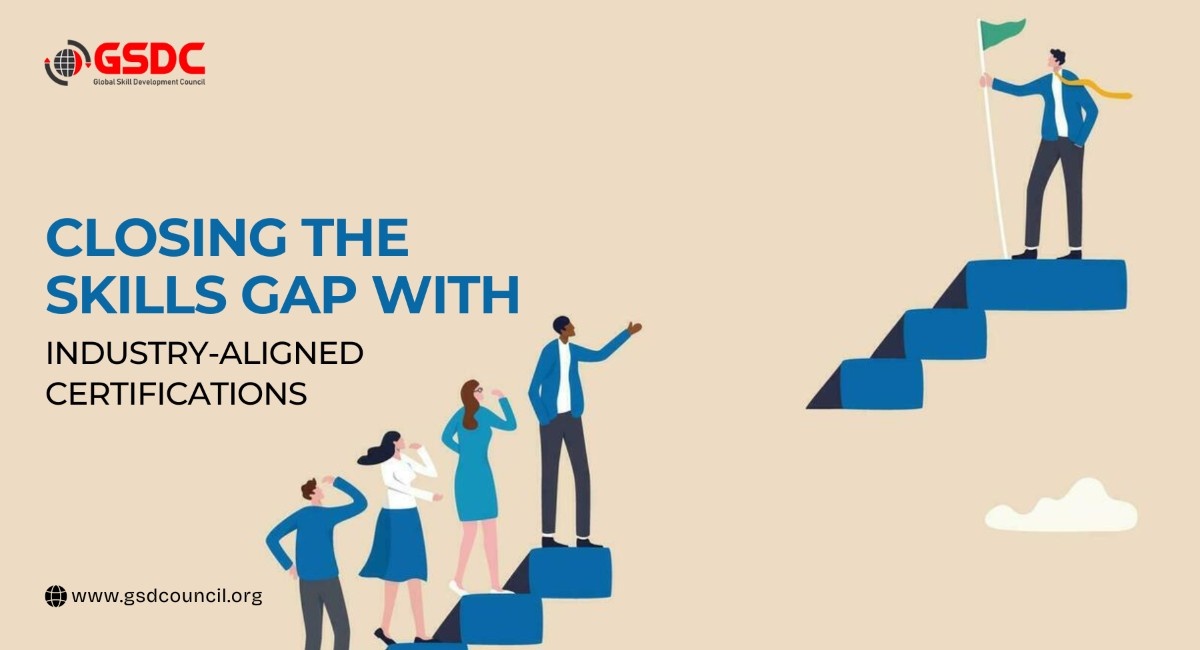
Closing the Skills Gap with Industry-Aligned Certifications
Written by Emily Hilton
The world is facing two main challenges because organizations cannot find workers with the necessary skills to handle technological advancements, which have reached their peak at present.
Digital transformation, together with generative AI and automation technologies and hybrid work arrangements, has created new standards for workplace performance. A large segment of the workforce does not possess essential skills, which results in decreased business competitiveness, together with innovation capacity.
Organizations can use industry-specific certifications, which include generative AI certifications and Learning & Development certifications, to create a powerful system that helps them fill their skills shortages. The certification process allows professionals who have expertise in essential technologies and methods to demonstrate their skills while achieving career advancement, enhancing organizational results, and decreasing recruitment challenges for high-demand positions.
The Skills Gap: A Growing Challenge
Several reports underscore the urgency of addressing skill mismatches:
- Almost 44% of skills required for current roles are expected to change by 2025, driven largely by technological advancement.
- Nearly 50% of employees will need significant reskilling by 2025 to stay relevant.
- 82% of companies report existing skills gaps, which will decrease their productivity and growth potential.
- In India, only 15% to 20% of professionals now possess AI skills despite the growing demand for these competencies.
- A global survey revealed that 58% of L&D leaders identify skills gaps and delayed AI adoption as their biggest challenges.
These figures paint a stark picture: without intentional upskilling and credentialing strategies, organisations face talent shortfalls that could stall innovation and revenue pipelines.
Why Industry-Aligned Certifications Matter
Industry-aligned certifications have moved beyond being “nice to have.” According to workforce data, 51% of employers use industry certifications to validate job readiness, often valuing them as much or more than traditional degrees.
Here’s why they’re essential:
1. They Build Job-Ready Skills Faster Than Degrees
Traditional academic programs fail to meet current job market requirements because they do not keep pace with the fast-evolving technology industry. An industry-aligned certification program that evaluates current skills that employers demand includes AI skills and project management abilities. The process of people learn new skills enables them to use their skills within organizational environments, while organizations track their progress in developing necessary skills.
Only 14% of organizations have established formal AI training programs, while 67% of HR executives face difficulties in finding applicants who possess sufficient AI competencies, according to AI training statistics. Organizations can identify necessary capabilities through a structured skills gap analysis, which compares existing workforce skills to essential requirements, and they can use certifications to efficiently address identified skills deficiencies.
2. Certifications Are Recognised Across Industries
Employers receive a direct capability assessment through industry-aligned certification programs, which establish it. The assessment shows both technical expertise and dedication to ongoing education with the capacity to adjust to changing job requirements. The skills gap analysis tool enables organisations to determine which certifications best support their business goals and employee development plans.
The results from surveys show that 96% of decision-makers think that certified employees provide measurable value, which results in higher productivity and better client satisfaction, and enables organizations to meet their growing skill requirements. The certification results demonstrate how skills gaps in AI implementation, digital leadership, and data-driven decision-making require specific training to address current industry needs.
3. They Empower Individuals and Organisations Alike
Certified professionals often command higher pay and greater career mobility because their skills are validated against industry expectations. For individuals wondering how to identify skills gaps in their own careers, certifications provide a structured pathway to benchmark and upgrade their expertise.
For organisations, certifications reduce hiring time and increase retention. Reskilling existing employees can be up to six times cheaper than hiring new talent externally, making certification pathways an economically strategic choice. When supported by ongoing skills gap analysis, businesses can continuously adapt learning investments, ensuring employees stay aligned with innovation and organisational growth.
Generative AI Certifications: Closing the AI Skills Gap
Generative AI is revolutionising industries from customer service to product design. Yet many organisations report their teams are unprepared to use AI effectively, even after training. One study found that while 98% of employees received some form of Generative AI training, over 80% still felt unprepared to apply it in real work scenarios.
The industry needs practical generative AI certifications that match industry requirements and teach students to implement AI in actual workplace settings, together with ethical applications of AI and responsible AI management and human- AI teamwork. The skills gap analysis process helps organizations use these certifications to create methods that detect emerging technology skills deficiencies and measure organizational capability growth through learning. Professionals can implement AI projects using their skills, which these certifications recognize.
Organizations that choose to invest in trustworthy generative AI certifications will experience tangible advancements in productivity improvements,together with accelerated AI solution implementation and a workforce that uses AI systems competently while they work to solve essential skill deficiencies.
The Role of L&D Certifications
Learning & Development (L&D) functions are integral to driving organisational skills strategies. However, many L&D professionals themselves lack experience with emerging technologies like AI, creating internal bottlenecks.
This is where specialised L&D certifications become transformative. They prepare learning professionals not only to design effective training but also to integrate analytics, AI-powered learning platforms, and adaptive learning pathways into corporate programmes. Organisations that cultivate certified L&D specialists are better equipped to scale learning through validated frameworks, ensuring their workforce evolves with technological change.
Strategic Benefits for Organisations
Implementing industry-aligned certification strategies delivers broad organisational benefits:
- Enhanced Talent Mobility: Certification frameworks enable employees to develop specific career paths that their organizations need to fulfill business objectives.
- Better Hiring Outcomes: The certification process enables organizations to evaluate candidates more effectively, which results in shorter recruitment times and decreased hiring risks.
- Stronger Employer Brand: Companies that value certification as an employee development tool demonstrate their commitment to workforce development, which helps them attract top candidates in a competitive recruiting environment.
- Quantifiable ROI: Organizations that implement formal training programs together with certification systems achieve better financial results and higher employee retention rates than their competitors.
Conclusion
The skills gap remains one of the decade's most pressing workforce challenges because organizations need to understand the skills gap definition before they can develop effective solutions.
Organizations need to establish an industry-aligned certification system that will help them track employee development through ongoing skills gap assessments to meet their current business needs.
Leaders can use a dependable skills gap assessment tool to learn how to discover skills deficiencies while dealing with actual skill shortages that include AI preparation and digital change. Professionals use certifications to develop their careers while demonstrating their value in the fast-evolving digital economy.

Related Certifications
Stay up-to-date with the latest news, trends, and resources in GSDC
If you like this read then make sure to check out our previous blogs: Cracking Onboarding Challenges: Fresher Success Unveiled
Not sure which certification to pursue? Our advisors will help you decide!