How to Have Safe and Ethical AI Conversations Using Claude
Written by Matthew Hale
The functions of artificial intelligence are fast transforming, and this is why we should be cautious and responsible about the discourse around the phenomenon.
The webinar, "How to Do Safe and Ethical AI Conversations," discussed the need to make AI interactions ethical, transparent, and accountable.
Regardless of whether you are talking about AI in the business realm, conversational bots powered by Claude AI, or walking through the samples of generative AI, it is vital to learn about the policy and implementation of AI ethics.
Why Safe and Ethical Conversations Matter in AI
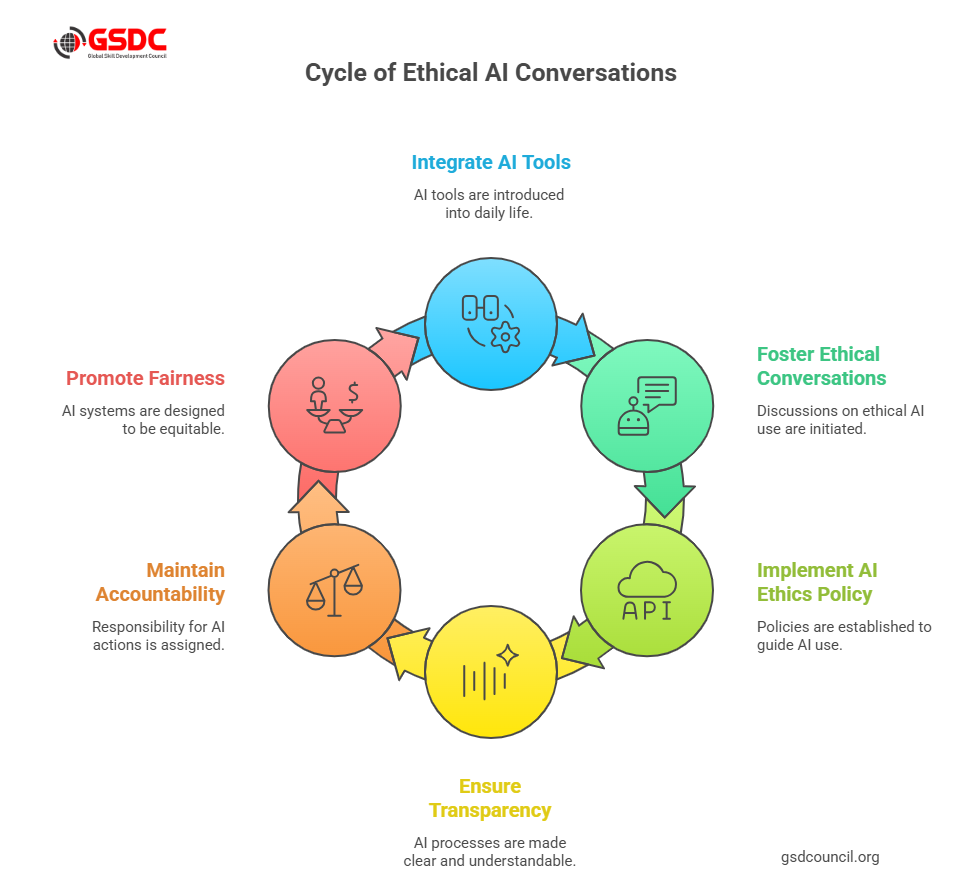
AI is transforming industries, but the conversations we have about it shape its trajectory. As AI tools like Claude AI and conversational bots become more integrated into our daily lives, ensuring that we use them ethically and responsibly is more important than ever.
The webinar provided a comprehensive guide on how to foster these conversations while focusing on the ethical implications of AI.
AI systems, including Claude AI tools, are not neutral. They can reflect biases and perpetuate harmful stereotypes if not properly guided. This is why it’s vital to implement an AI ethics policy and governance that emphasizes transparency, accountability, and fairness.
The Importance of Ethical Governance in AI Conversations
One of the core themes discussed in the webinar was the necessity of an AI ethics policy and governance framework.
With more organizations leveraging AI conversational bots and Claude AI, ensuring that these tools are used ethically can mitigate potential risks. The conversation around AI ethics should focus on:
- Transparency: Users should be aware when they are interacting with AI and how their data is being used.
- Accountability: Developers and organizations must take responsibility for the outputs produced by AI systems.
- Bias Mitigation: AI tools should be developed and tested to avoid perpetuating bias and discrimination.
How to Use Claude AI and AI Conversational Bots Safely
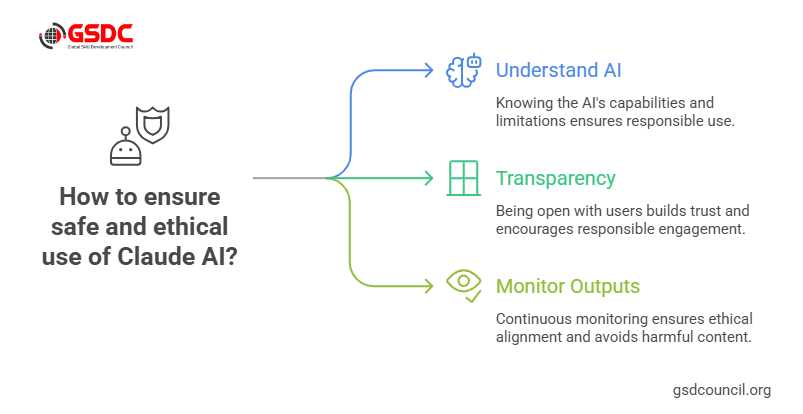
AI conversational bots, especially those built with Claude AI, are becoming increasingly common in customer service, HR, and many other sectors. But how do we ensure that these interactions are safe and ethical?
- Understand What Claude AI Is: Claude AI is a generative AI tool that excels at processing natural language and providing human-like interactions. But like all AI tools, Claude AI can only be as good as the data it’s trained on. This means that ethical AI usage starts with how we train these systems.
- Transparency with Users: Whether you’re deploying Claude AI in a chatbot or an AI assistant, it’s important to clearly communicate to users that they are interacting with AI. Transparency builds trust and encourages users to engage with the technology in a responsible way.
- Monitor Outputs: As with any AI conversational bot, it's essential to continuously monitor the outputs to ensure they align with ethical standards. This includes avoiding harmful or biased language and ensuring responses are aligned with company policies and ethical guidelines.
Generative AI Examples in Ethical AI Conversations
To further illustrate how ethical AI can work in real-world scenarios, the webinar provided several generative AI examples:
- Automated Customer Service: Many businesses are deploying AI-powered chatbots for customer service. However, ensuring these bots follow ethical guidelines—such as respecting user privacy and avoiding biased responses—was a critical point in the discussion.
- Healthcare Applications: Another generative AI example discussed in the session was the use of AI in healthcare. AI tools like Claude AI can assist with diagnosing conditions or providing recommendations, but ethical concerns like data privacy and accuracy need to be addressed to ensure the AI benefits all users fairly.
- AI in Hiring: Claude AI and other AI systems are increasingly being used to screen job applicants. The ethical use of AI in hiring processes was discussed, emphasizing the need for transparency, fairness, and unbiased decision-making to avoid perpetuating discrimination.
How to Incorporate AI Ethics Into Your Business
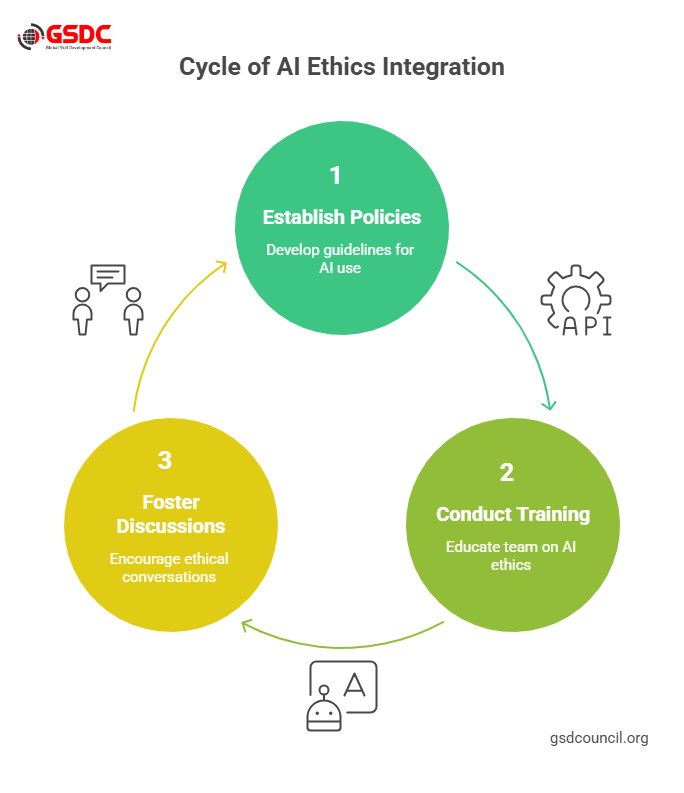
The key takeaway from the webinar was the importance of incorporating AI ethics policy and governance into your organization.
For businesses utilizing AI tools like Claude AI, it’s critical to establish a framework that ensures responsible usage.
Here’s how you can start:
- Establish Clear AI Governance Policies: Develop guidelines for AI use, ensuring that AI tools are aligned with your organization’s values and ethical standards.
- Ongoing Training and Education: Keep your team informed about AI ethics, the potential risks associated with AI, and how to use Claude AI and other AI tools safely.
- Encourage Ethical AI Conversations: Foster a culture that prioritizes ethical discussions about AI tools, their capabilities, and their limitations. This will help build trust and understanding among employees, clients, and stakeholders.
If you’re looking to elevate your understanding of AI tools and their ethical use, the GSDC Gen AI Tool Expert Certification is a great way to deepen your expertise and enhance your career prospects in AI.
Building a Responsible AI Future
The potential of AI to revolutionize industries is huge, and it can only be utilized responsibly.
The key to the future of AI as a service in service to all is by adopting Claude AI, AI conversational bots, and other generative AI solutions with a high commitment to ethics, transparency, and accountability.
The foundation of safe and ethical AI discourse has been laid in this webinar.
Whether you are learning about how to use Claude AI or just want to know more about the ins and outs of AI ethics policy and governance, this webinar has set the stage for AI to contribute to society instead of harming it.

Related Certifications
Stay up-to-date with the latest news, trends, and resources in GSDC
If you like this read then make sure to check out our previous blogs: Cracking Onboarding Challenges: Fresher Success Unveiled
Not sure which certification to pursue? Our advisors will help you decide!