Why Emotional Intelligence Matters More Today Than Ever Before
Written by Emily Hilton
- What Is Emotional Intelligence?
- What Is Emotional Intelligence and Why It Matters?
- Why Emotional Intelligence Matters More Today Than Ever Before
- Emotional Intelligence Examples in Everyday Life
- The Importance of Emotional Intelligence in the Workplace
- The Importance of Emotional Intelligence in Leadership
- What Does Low Emotional Intelligence Look Like?
- Why Consider an Emotional Intelligence Certification?
- Conclusion
Imagine two employees receiving the same feedback from their manager. The first employee becomes defensive, argues about the criticism, and spends the rest of the day feeling frustrated. The second employee takes a moment to understand the feedback, asks questions, and uses it to improve their work.
Both employees may have similar technical skills, education, and experience. However, their responses to the same situation are very different. What makes the difference? One important factor is emotional intelligence.
Today, we live in a world where people face tight deadlines, constant digital communication, changing workplace expectations, and growing professional responsibilities. Managing these demands requires more than technical knowledge. It also requires the ability to understand emotions, communicate clearly, handle stress, and build healthy relationships.
This is why emotional intelligence is becoming an essential skill in both personal and professional life. Whether you are a student, an employee, a manager, or a business leader, understanding emotions can help you make better decisions and work more effectively with others.
But what is emotional intelligence, and why does it matter so much today? Let's explore its meaning, benefits, practical examples, and ways to develop this important skill.
What Is Emotional Intelligence?
Emotional intelligence is the ability to recognize, understand, and manage your own emotions while also recognizing and responding appropriately to the emotions of others.
In simple terms, it means understanding what you feel, knowing how your emotions influence your actions, and responding thoughtfully instead of reacting immediately.
The emotional intelligence definition goes beyond simply being kind or understanding other people. It includes self-awareness, emotional control, empathy, communication, and relationship management.
For example, imagine that a colleague disagrees with your idea during a meeting. Instead of immediately taking the disagreement personally, you try to understand their point of view, explain your reasoning calmly, and work toward a solution.
That is emotional intelligence in action.
What Is Emotional Intelligence and Why It Matters?
Emotional intelligence matters because emotions influence almost every part of our daily lives. They affect how we communicate, respond to challenges, make decisions, and build relationships.
A person may be highly knowledgeable but still struggle to work in a team if they cannot manage frustration or accept feedback. Similarly, a manager may have strong business knowledge but find it difficult to motivate employees without understanding their concerns.
Emotional intelligence helps bridge this gap between knowing what to do and responding effectively in real situations.
It can help people:
- Communicate more clearly and respectfully.
- Handle disagreements without creating unnecessary conflict.
- Understand different perspectives.
- Make thoughtful decisions under pressure.
- Build trust and stronger relationships.
- Adapt to change and manage stress more effectively.
In a world where people work across different teams, cultures, and communication styles, these abilities have become increasingly valuable.
Why Emotional Intelligence Matters More Today Than Ever Before
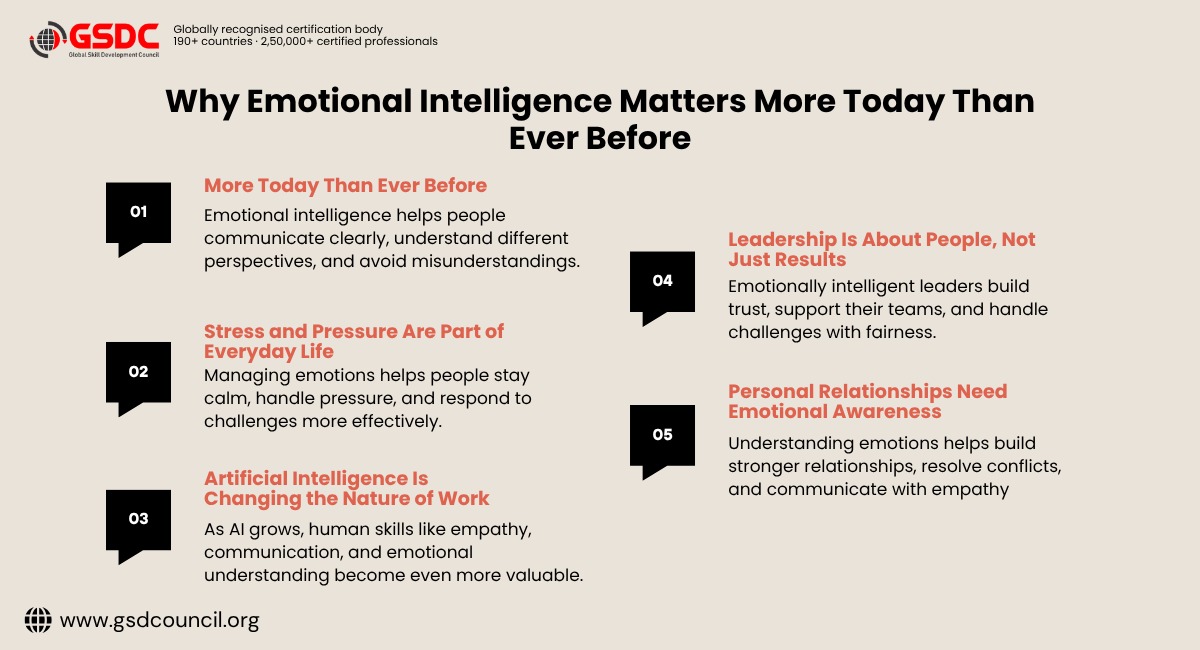
Several changes in modern life have made emotional intelligence more important than ever.
1. Modern Workplaces Require Better Communication
Today's workplaces depend on collaboration. Employees regularly work with people from different departments, backgrounds, and locations. Remote and hybrid work have also made communication more challenging because people may not always understand the tone or intention behind a message.
Consider receiving a short email from your manager that says, "We need to discuss your work."
Without additional context, you might assume something is wrong and become anxious. An emotionally intelligent person recognizes that this is only one possible interpretation. Instead of making assumptions, they ask for clarification.
This ability to pause, consider different explanations, and communicate openly can prevent unnecessary misunderstandings.
2. Stress and Pressure Are Part of Everyday Life
Work deadlines, personal responsibilities, financial concerns, and constant notifications can leave people feeling overwhelmed.
When stress builds up, people may become impatient, lose concentration, or respond emotionally to minor problems.
Emotional intelligence helps individuals recognize these feelings before they affect their behaviour. For example, someone who notices that they are becoming frustrated may take a short break, organize their priorities, or discuss the problem with a colleague.
This does not mean emotionally intelligent people never feel stressed. It means they learn to respond to stress in healthier and more productive ways.
3. Artificial Intelligence Is Changing the Nature of Work
Artificial intelligence is transforming how people complete tasks, analyze information, and solve problems. As AI tools become more common, technical skills remain important, but human abilities such as empathy, communication, judgment, and relationship-building also deserve attention.
AI can help generate reports, summarize information, and automate repetitive work. However, understanding a colleague's concerns, managing a difficult conversation, or helping a team navigate uncertainty requires human understanding and judgment.
Emotional intelligence can therefore complement technical expertise and help professionals work more effectively in AI-supported environments.
4. Leadership Is About People, Not Just Results
Modern leaders are expected to deliver results while supporting employee development, encouraging collaboration, and managing change.
A leader who only focuses on targets may overlook employee concerns, leading to lower morale and communication problems. In contrast, an emotionally intelligent leader listens to team members, explains decisions clearly, and addresses challenges with fairness.
This is one reason emotional intelligence leadership has become an important consideration in leadership development.
5. Personal Relationships Need Emotional Awareness
Emotional intelligence is not limited to professional success. It also affects friendships, family relationships, and personal well-being.
People often disagree because they interpret situations differently or struggle to express what they feel. Understanding emotions can help individuals communicate their needs, listen without immediately judging, and resolve disagreements more constructively.
The ability to recognize your own feelings and understand someone else's perspective can make everyday interactions healthier.
Emotional Intelligence Examples in Everyday Life
Understanding emotional intelligence becomes easier when we see how it works in real situations.
Example 1: Receiving negative feedback
An employee receives feedback that their report needs improvement. Instead of arguing, they listen carefully, ask what needs to change, and use the feedback to improve the next report.
Example 2: Managing workplace conflict
Two colleagues disagree about how to complete a project. Rather than turning the disagreement into a personal argument, they discuss the facts, explain their concerns, and agree on the next steps.
Example 3: Supporting a team member
A manager notices that an employee has become unusually quiet during meetings. The manager checks in privately, listens to the employee's concerns, and explores ways to offer support.
Example 4: Managing personal emotions
Someone feels angry after receiving an unexpected message. Instead of sending an immediate response, they pause, reflect on their feelings, and reply when they can communicate calmly.
These emotional intelligence examples show that the skill is not about avoiding negative emotions. It is about understanding them and choosing a constructive response.
The Importance of Emotional Intelligence in the Workplace
The importance of emotional intelligence in the workplace continues to grow as organizations depend on teamwork, communication, and adaptability.
Employees with stronger emotional skills can be better equipped to handle disagreements, respond to feedback, and maintain productive relationships. These behaviours can contribute to a healthier work environment.
Here are some important benefits:
- Better teamwork: Employees understand different perspectives and cooperate more effectively.
- Improved communication: People express concerns clearly and listen to others before responding.
- Stronger conflict resolution: Disagreements are addressed through discussion rather than personal attacks.
- Better adaptability: Employees can manage uncertainty and adjust to changing responsibilities.
- Healthier professional relationships: Empathy and respect help build trust between colleagues and managers.
Organizations should also remember that emotional intelligence is not a substitute for fair policies, reasonable workloads, or supportive management. It works best when employees and leaders both contribute to a respectful workplace.
The Importance of Emotional Intelligence in Leadership
The importance of emotional intelligence in leadership becomes clear when leaders must make difficult decisions, motivate teams, and manage change.
Emotionally intelligent leaders understand how their behaviour affects employees. They listen to concerns, communicate clearly, and remain calm during challenging situations.
Key benefits of emotional intelligence in leadership:
- Builds Trust: Creates a supportive environment where employees feel heard and valued.
- Improves Communication: Helps leaders share feedback and difficult decisions respectfully.
- Manages Conflicts: Encourages fair solutions instead of blaming team members.
- Supports Better Decisions: Helps leaders consider emotions and different perspectives before acting.
- Motivates Employees: Recognizes team challenges and encourages professional growth.
- Promotes Accountability: Balances understanding with responsibility for results.
For example, when a project misses its deadline, an emotionally intelligent leader identifies the reasons, discusses improvements, and holds the team accountable without creating unnecessary fear.
Emotional intelligence helps leaders balance performance expectations with empathy, supporting both business goals and employee development.
What Does Low Emotional Intelligence Look Like?
Low emotional intelligence refers to difficulties in recognizing, understanding, or managing emotions and responding effectively to other people's feelings.
It is important not to use the term as a label to judge someone based on a single incident. People can struggle with emotional regulation in certain situations, particularly during periods of stress.
Some possible signs of low emotional intelligence include:
- Frequently reacting angrily to criticism.
- Finding it difficult to accept responsibility for mistakes.
- Interrupting others without listening to their views.
- Misunderstanding feedback as a personal attack.
- Struggling to recognize how one's words affect other people.
- Avoiding difficult conversations or escalating minor disagreements.
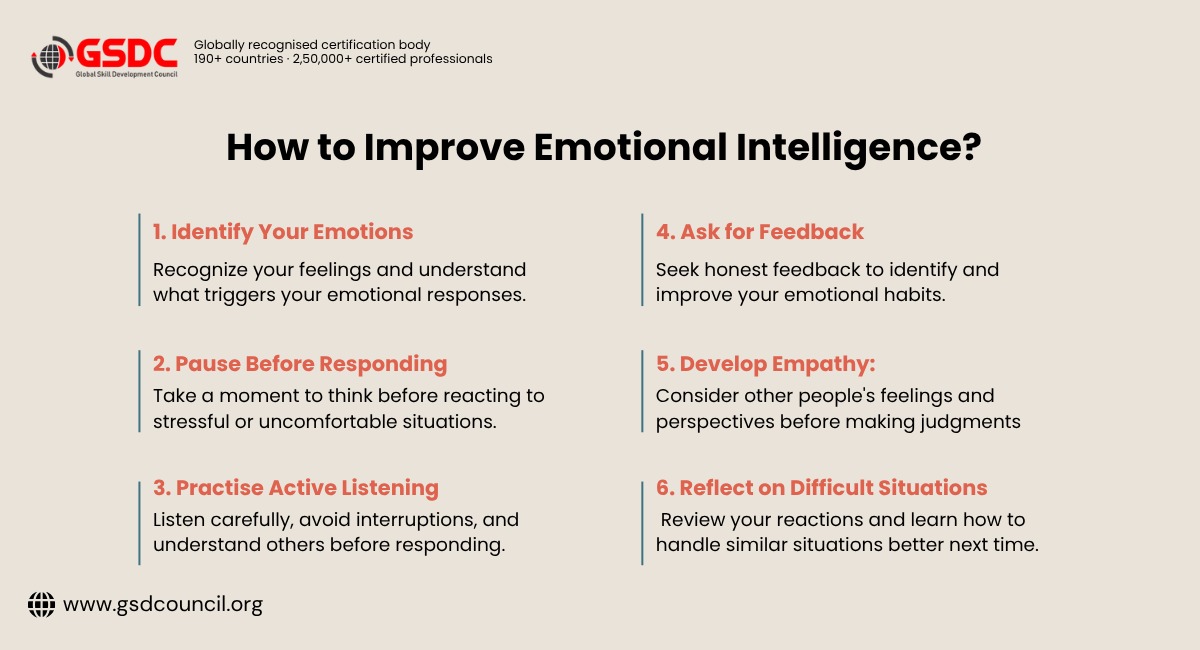
These behaviours can change with awareness, practice, feedback, and support. Emotional intelligence is not a fixed trait that a person either has or does not have.
Why Consider an Emotional Intelligence Certification?
For professionals who want a structured approach to developing these skills, an emotional intelligence certification may be worth exploring.
GSDC’s Certified Emotional Intelligence Professional can be considered by professionals looking to strengthen their understanding of emotional awareness, communication, empathy, self-regulation, and the practical application of emotional intelligence in professional settings.
It may be especially useful for managers, team leaders, HR professionals, trainers, coaches, and individuals preparing for leadership responsibilities.

Here are some key ways this Certified Emotional Intelligence Professional can benefit professionals:
- Improves Self-Awareness: Helps professionals recognize their emotions, strengths, and areas for improvement.
- Strengthens Communication: Encourages active listening, empathy, and clearer communication with colleagues and clients.
- Develops Leadership Skills: Helps managers understand team emotions, build trust, and respond effectively to workplace challenges.
- Supports Conflict Resolution: Encourages professionals to manage disagreements calmly and find constructive solutions.
- Enhances Teamwork: Promotes mutual understanding, collaboration, and stronger professional relationships.
- Supports Career Development: Demonstrates a commitment to developing interpersonal and emotional intelligence skills that are valuable
Conclusion
Emotional intelligence has become an important skill because modern life requires people to manage change, communicate across differences, handle pressure, and build meaningful relationships.
Technical knowledge can help you perform a task, but emotional intelligence can influence how you respond when things go wrong, how you work with others, and how you grow from difficult experiences.
From employees managing workplace challenges to leaders guiding teams through uncertainty, emotional awareness can support better decisions and healthier relationships.
In the end, emotional intelligence is not about controlling every emotion. It is about understanding your emotions well enough to make better choices, both at work and in life.

Related Certifications
Frequently Asked Questions
Emotional intelligence is the ability to understand and manage your own emotions while recognizing and responding appropriately to the emotions of others.
It supports communication, teamwork, conflict resolution, adaptability, and stronger professional relationships. These skills can help employees and managers work together more effectively.
Yes. People can develop emotional intelligence through self-reflection, active listening, emotional regulation, constructive feedback, and regular practice.
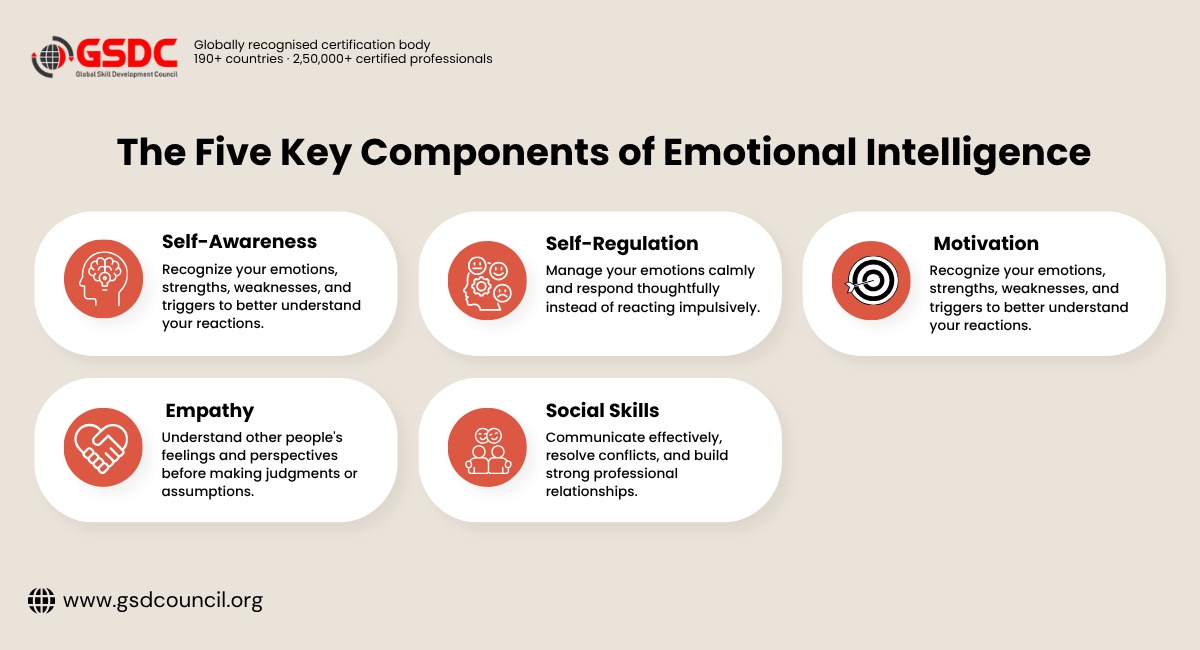
The five commonly recognized components are self-awareness, self-regulation, motivation, empathy, and social skills.
An emotional intelligence certification can be useful for professionals who want structured learning and practical techniques. Its value depends on the quality of the program, its relevance to your goals, and how consistently you apply what you learn.
Stay up-to-date with the latest news, trends, and resources in GSDC
If you like this read then make sure to check out our previous blogs: Cracking Onboarding Challenges: Fresher Success Unveiled
Not sure which certification to pursue? Our advisors will help you decide!