Top 10 Latest Technology Trends You Need to Know

Written by Emily Hilton
Technology doesn't wait for anyone to catch up. Every year the list of skills worth learning shifts a little, and the professionals who stay ahead of it are usually the ones who end up leading projects instead of just executing them. If you've searched for the top 10 technology trends before, you've probably noticed how quickly last year's list starts to feel dated. This guide fixes that. It walks through the technology trends actually shaping hiring, budgets, and career paths right now, plus a look at the top strategic technology trends enterprise IT leaders are prioritizing, because CIOs and individual professionals are usually reading from the same playbook these days.
We'll also break down what these trends look like inside two industries that don't always get enough attention in generic "top tech trends" roundups: utilities and education.
The Top 10 Technology Trends to Learn Right Now

These are the latest technology trends with staying power. Some are old enough that you've heard of them for years (cloud, cybersecurity), and some have only become mainstream conversation topics recently (agentic AI, physical AI). Either way, all ten show up consistently in hiring data and skills reports.
1. Generative AI
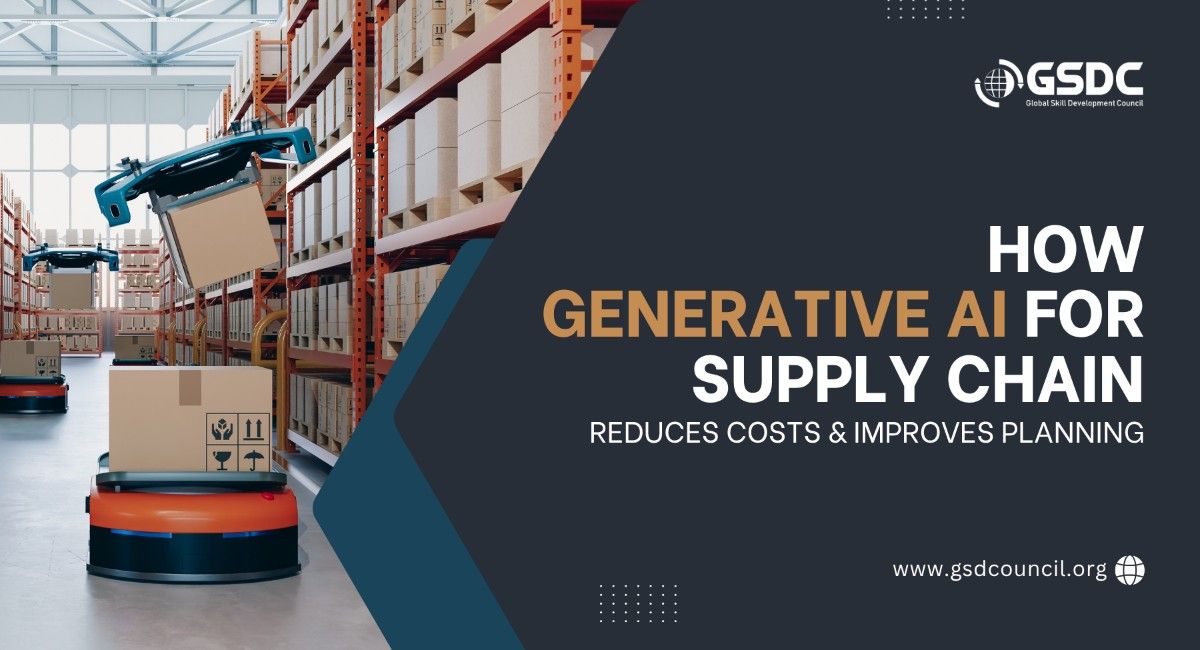
Generative AI has moved past the "impressive demo" phase. It's now embedded in everyday work: drafting, coding, summarizing, designing, and increasingly, running multi-step tasks with limited human input. Market estimates vary depending on how narrowly you define the category, but most analysts put the global generative AI market somewhere in the tens of billions of dollars today, with a compound annual growth rate well above 30% projected through the next decade.
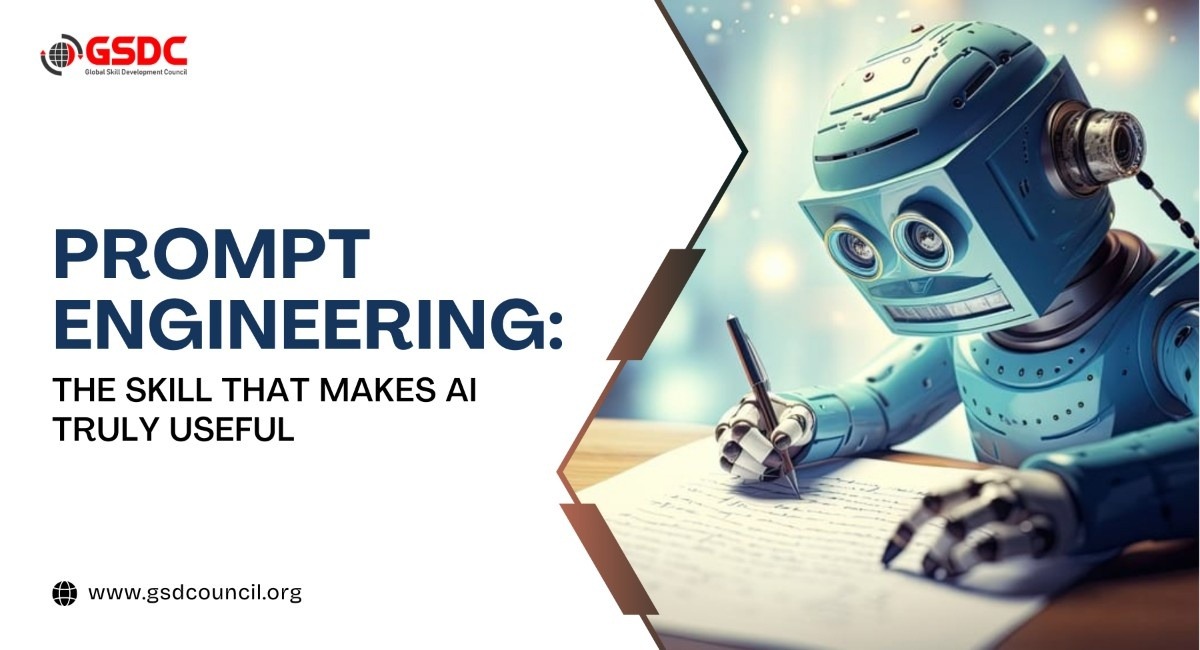
What's changed most is how organizations use it. Instead of a single chatbot bolted onto a workflow, teams are building pipelines where generative AI drafts, an agent checks the work, and a human signs off. Professionals who understand prompt design, output evaluation, and where these tools tend to fail (facts, math, anything requiring real-world verification) are the ones getting pulled into strategic projects instead of just using the tools casually.
2. Artificial Intelligence
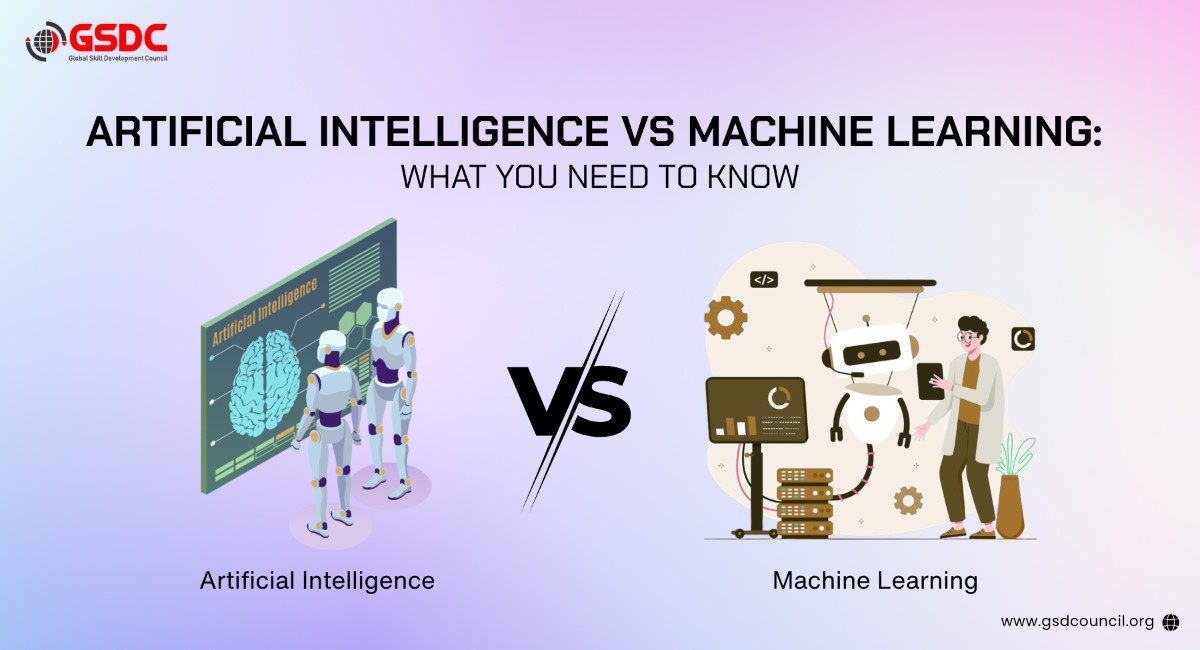
Artificial Intelligence as a broader category, everything from predictive models to recommendation engines to computer vision, remains the backbone that generative AI and agentic systems sit on top of. The global AI market has crossed into the hundreds of billions of dollars in value and keeps climbing at a rapid clip, driven by enterprise automation, fraud detection, personalization, and edge AI deployments tied to IoT devices.
What's worth noting for anyone building a career here: the roles are diversifying. It's no longer just "data scientist." Companies are hiring for AI governance, model evaluation, AI security, and prompt engineering as distinct specialties. Understanding the fundamentals of how models are trained, deployed, and monitored gives you flexibility across all of them.
3. Machine Learning
Machine learning is the engine room of most AI applications, and it hasn't slowed down. ML models quietly power fraud detection in banking, diagnostic support in healthcare, demand forecasting in retail, and predictive maintenance in manufacturing and utilities. Being a subset of AI, ML learns from data patterns rather than explicit rules, which is exactly why it scales so well across such different industries.
The job market here still rewards depth: people who understand feature engineering, model evaluation, and the practical trade-offs between accuracy and interpretability tend to outearn people who can only call a pre-built API. If you're mapping out where to specialize, ML remains one of the more durable choices on this list.
4. Blockchain
Blockchain's story has quieted down since the crypto headlines of a few years ago, but the underlying technology has kept finding new homes. Supply chain provenance, healthcare records, digital identity, and cross-border payments are where blockchain adoption is actually growing, often without the word "blockchain" appearing anywhere in the marketing.
Companies including IBM, TCS, and Accenture continue to run dedicated blockchain practices, and enterprise use cases around traceability and fraud prevention are picking up steam again as digital provenance (verifying where data, content, and AI outputs actually came from) becomes a bigger concern across industries.
5. Cybersecurity
Cybersecurity is arguably the trend with the least room for debate. The global cybersecurity workforce gap sits at roughly 4.8 million unfilled roles according to ISC2's most recent workforce study, and that number has grown even as the active workforce expanded, because demand keeps outpacing supply. In the US alone, active job postings tracked by CyberSeek regularly number in the hundreds of thousands.
Two shifts are worth watching. First, "preemptive cybersecurity," using AI to anticipate and block threats before they land, is becoming a standard expectation rather than a nice-to-have. Second, cloud security and AI/ML defense have become the two hardest skill gaps to fill, which means specializing there tends to pay off faster than a generalist security path.
6. Full Stack Development
Full stack development, building both the front-end and back-end of applications, remains one of the most transferable skill sets in tech. A full-stack developer who's comfortable with UI, server logic, APIs, and database management can move between industries and company sizes without starting from scratch each time.
What's evolved is the toolchain. AI-assisted coding tools have taken over a meaningful chunk of boilerplate work, which means the value of a full stack developer increasingly sits in architecture decisions, debugging, and system design rather than typing speed. Developers who lean into that shift tend to be the ones AI can't easily replace.
7. DevOps
DevOps culture, breaking down the wall between development and operations teams, keeps proving its worth as release cycles get shorter and systems get more distributed. Continuous integration, continuous delivery, infrastructure as code, and automated testing are now baseline expectations rather than differentiators.
The newer wrinkle is AI-assisted operations: teams are using machine learning to predict deployment failures, automate incident response, and flag anomalies before they become outages. Professionals who can bridge traditional DevOps practices with this kind of AI tooling are in a strong position heading into the next few years.
8. Metaverse
The metaverse hype cycle cooled off considerably, but the underlying technologies, AR, VR, and immersive 3D environments, haven't disappeared. They've just found more practical homes: industrial training simulations, remote collaboration tools, virtual product prototyping, and healthcare simulations for surgical training.
If you're evaluating whether this is still worth learning, the honest answer is: it depends heavily on the industry. Manufacturing, defense, and healthcare are investing steadily in immersive tech for training and design. Consumer-facing "virtual worlds," less so, at least for now.
9. Internet of Things (IoT)
IoT continues expanding quietly in the background of daily life: smart meters, connected vehicles, industrial sensors, wearable health devices. The convergence of IoT with edge computing, AI, and 5G is what's driving the next wave, since it lets devices process data locally instead of shipping everything to the cloud first.
Generative AI is even starting to layer on top of IoT data streams for predictive maintenance and anomaly detection, a niche market that's growing at close to 28% annually according to recent industry forecasts. Security remains the biggest open challenge; every new connected device is another potential entry point for attackers, which is part of why IoT security specialists are increasingly in demand.
10. Cloud Computing
Cloud computing has fully graduated from "emerging trend" to "operational default." AWS, Microsoft Azure, and Google Cloud still dominate, but the more interesting shift is toward multi-cloud strategies and, in some sectors, geopatriation: deliberately shifting workloads to sovereign or regional cloud providers to manage geopolitical and regulatory risk.
North America alone accounts for well over $400 billion in cloud computing spend, and that figure keeps climbing as more organizations migrate legacy systems and lean into cloud-based AI infrastructure. For professionals, cloud architecture, cost optimization (FinOps), and multi-cloud security are the specialties commanding the strongest demand right now. If you're aiming to build expertise here, a structured Certification in Cloud Computing is a practical way to formalize that knowledge before applying it on the job.
Top Strategic Technology Trends for the Enterprise
Beyond the ten trends above, which reflect what individual professionals are learning, it's worth looking at what enterprise IT leaders are prioritizing. Analyst circles publish a Top Strategic Technology Trends rundown aimed at CIOs each year, and it's become one of the most-cited frameworks in enterprise technology planning. The current list of top 10 strategic technology trends is organized into three themes: building AI foundations, orchestrating intelligent systems, and protecting enterprise value.
- AI-Native Development Platforms: Software built with generative AI embedded directly into the development process, letting small teams ship faster.
- AI Supercomputing Platforms: Infrastructure purpose-built for training and running large-scale AI models, paired with tighter governance and cost controls.
- Confidential Computing: Protecting sensitive data while it's actively in use, not just at rest or in transit.
- Multiagent Systems: Modular AI agents that collaborate on complex, multi-step tasks instead of one model doing everything.
- Domain-Specific Language Models: Smaller, specialized models trained for accuracy and compliance in a particular industry rather than general-purpose use.
- Physical AI: Intelligence embedded into robots, drones, and smart equipment that interact with the physical world.
- Preemptive Cybersecurity: Shifting security from reactive incident response to proactively blocking threats before they land.
- Digital Provenance: Verifying the origin and authenticity of software, data, and AI-generated content.
- AI Security Platforms: Centralized visibility and control across every AI application an organization runs, third-party and custom alike.
- Geopatriation: Moving workloads to sovereign or regional cloud providers to manage geopolitical risk.
The overlap with the individual-skills list above isn't a coincidence. Enterprise priorities and personal skill-building tend to move in the same direction, just with different vocabulary. If your organization is investing in AI-native development platforms, for instance, that's the enterprise-scale version of the same generative AI fluency covered earlier.
Technology Trends in the Utilities Industry
Utilities rarely make it onto generic "top tech trends" lists, but the sector is going through one of its biggest technology shifts in decades. Surging electricity demand from AI data centers, aging grid infrastructure, and more frequent extreme weather events have pushed traditional utility operations to their limits.
A few patterns stand out:
- AI-driven grid management is moving from pilot projects to core operations. Utilities are using machine learning for outage prediction, asset condition monitoring, and load forecasting, rather than relying purely on scheduled maintenance.
- Smart metering and AMI (Advanced Metering Infrastructure) upgrades are accelerating, giving utilities real-time consumption data instead of monthly estimates.
- IoT sensors across the grid edge (the point where the grid meets homes, EVs, and rooftop solar) are enabling much faster response to demand spikes and equipment failures.
- Cybersecurity has become a board-level concern for utilities specifically, since grid infrastructure is now considered critical national infrastructure and a prime target for attacks.
- Predictive maintenance models have shown outage reductions in the double digits for utilities that have deployed them at scale, according to several energy-sector case studies published this year.
For professionals with a cybersecurity, IoT, or AI background, utilities represent one of the more overlooked but well-funded sectors to specialize in right now.

Technology Trends in Education
Education has historically been slow to adopt new technology, which makes the current shift genuinely notable. Generative AI adoption among education organizations now sits well above 80%, the highest of any sector tracked.
What's actually changing in classrooms and training programs:
- Personalized and adaptive learning platforms that adjust content difficulty in real time.
- AI teaching assistants handling grading, lesson planning, and admin work.
- AI tutoring tools, with some studies showing faster learning outcomes than traditional instruction alone.
- Immersive, simulation-based training, especially in technical and vocational programs where AR and VR let learners practice on equipment that's expensive or risky in real life.
- A widening training gap: institutions are adopting AI tools faster than they're training staff to use them, with under half of educators reporting any formal AI training.
That gap is the opportunity for instructional designers and corporate L&D: demand for people who can actually train others on these tools is outpacing the tools themselves.
What a Good Technology Trends Report Should Tell You
If you're evaluating a technology trends report, whether it's from an analyst firm, a vendor whitepaper, or an internal one your company puts together, it's worth applying a quick filter before trusting the conclusions. A useful report should tell you which trends are backed by adoption data (not just funding announcements), which industries are actually deploying a technology versus piloting it, and what skills gap exists between where the workforce is today and where the trend is heading. Reports that skip straight to predictions without grounding them in current adoption numbers are usually more marketing than analysis.

Conclusion
The technologies on this list, from generative AI down to cloud computing, aren't going anywhere anytime soon, and neither is the enterprise-focused list of strategic trends CIOs track alongside them. What's changed is how fast expectations around each one are moving. Professionals who commit to continuous learning, rather than treating any single certification as a finish line, end up with real career flexibility.
Pick the trend that overlaps most with work you're already doing. Depth in one area, paired with a working knowledge of the other nine, opens more doors than trying to master all ten at once.

Related Certifications
Stay up-to-date with the latest news, trends, and resources in GSDC
If you like this read then make sure to check out our previous blogs: Cracking Onboarding Challenges: Fresher Success Unveiled
Not sure which certification to pursue? Our advisors will help you decide!